Non-Slip Tile & DCOF
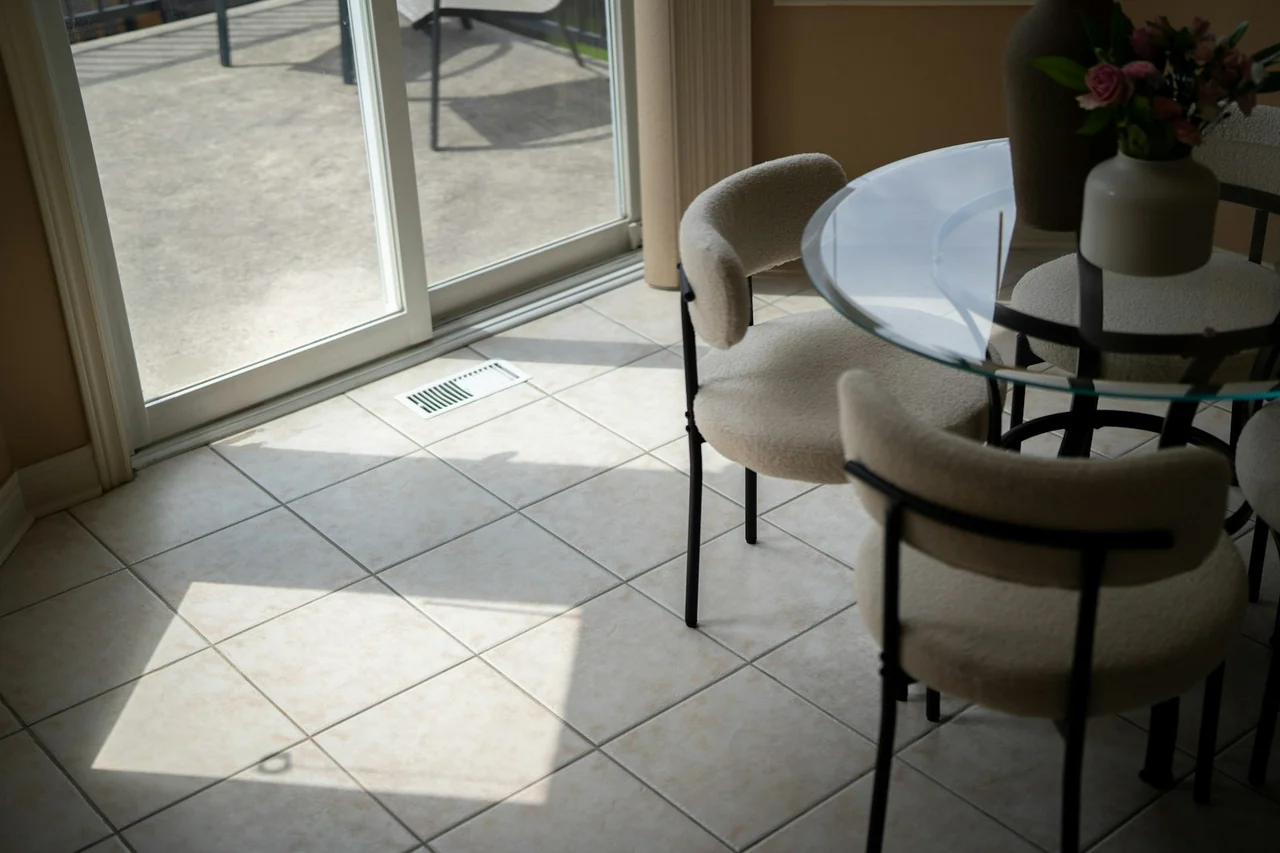
ANSI A137.1 sets a 0.42 wet DCOF floor for level wet areas, but a soapy Florida shower floor wants 0.50-0.60 — which is why small mosaic with dense grout lines beats a big slick tile underfoot.
10 min readRead →
Free In-Home Estimate
One Crew · Flooring to FinishOne Project Director · Statewide Florida Service
Free In-Home EstimateStatewide Florida
Pro Work Flooring Editorial
Waterproof ratings, wear-layer mils, PEI wear grades, Janka hardness, and slab MVER numbers — explained for the climate they have to survive. Humidity, slab-on-grade moisture, salt air, and the FBC: the Pro Work Flooring editorial by the install crew that does the work statewide.
239 articles · updated as specs and code change · one crew, flooring to finish.
/// The Latest ///
Material specs that decide whether a floor survives a Florida summer. Waterproof ratings, slab moisture limits, PEI wear grades, and FBC permit reality. The full archive — sorted newest first, filterable by topic and format above.
ANSI A137.1 sets a 0.42 wet DCOF floor for level wet areas, but a soapy Florida shower floor wants 0.50-0.60 — which is why small mosaic with dense grout lines beats a big slick tile underfoot.
10 min readRead →
Florida block homes have no studs to catch. Here is where concrete screws and sleeve anchors actually hold in a CMU wall, why mortar joints fail, and how to lag a ledger to the block instead.
10 min readRead →
A 0.42 wet DCOF clears a level Florida bathroom floor, but a barefoot shower or pool deck needs a higher declared rating. Here is how to read slip resistance the way an installer does.
10 min readRead →
Converting a garage turns unconditioned space into conditioned living area — triggering energy code, egress, HVAC, and electrical. In HVHZ counties, wind-load rules add a second path Central Florida skips.
11 min readRead →
Both keep your boxes, so the choice is about the door. Painting re-coats what you have and fails on thermofoil; refacing replaces the visible front with a moisture-stable material. How to decide in a humid Florida kitchen.
10 min readRead →
Crown sits where ceiling humidity is highest, so the material decides longevity. Here is how dense polyurethane, MDF, solid wood, and cellular PVC compare in a humid Florida home.
10 min readRead →
Standard MDF baseboard wicks and swells at the floor line; cellular PVC never rots. Here is how PVC, MDF, and wood trim compare on the specs that decide longevity in a humid, slab-on-grade Florida home.
10 min readRead →
Impervious porcelain barely drinks water, which changes how the mortar cures. Here is when Florida installs need polymer-modified A118.4/A118.15 and when the membrane forces unmodified A118.1.
10 min readRead →
Wood-look porcelain shrugs off the humidity and flooding that cup solid hardwood, but it never refinishes and returns less at resale. The spec-by-spec tradeoff, room by room.
11 min readRead →
How much space the Florida Building Code requires around a toilet, sink, and shower, why NKBA recommends going further, and how the two numbers shape a small-bath layout.
11 min readRead →
Florida adopts the NEC, so your bathroom needs GFCI on every outlet, one receptacle within 3 ft of each basin, nothing inside the tub/shower zone, and a 20A circuit. Here is the code, plainly.
10 min readRead →
A curbless shower has no dam to hold water back, so the slab itself does the work. Here is how the floor is recessed, sloped to a linear or center drain, and sealed to ANSI A118.10 in a Florida home.
9 min readRead →
Page 8 of 20 · 239 articles total
Browse by Format
Every Pro Work Flooring article is built around one format. Comparisons for material selection, buying guides for specs, code explainers for permits, and how-to playbooks for the step-by-step of a Florida install.
Editor's Picks
If you read three Pro Work Flooring articles before you pick a floor for a Florida home, read these: the waterproof-flooring breakdown for humidity, the slab moisture testing every install depends on, and the porcelain-versus-ceramic call by PEI wear grade.
By Service Silo
Every silo surfaces its most recent article here. Click the silo name to drop into the full set of services; click the latest article to read it.
Browse by Silo
Each silo has its own set of articles and service guides. Pick the one that matches your project — every link below leads to the full silo with services, specs, and FAQs.
01
Waterproof LVP and rigid-core SPC for humidity, engineered wood acclimation, slab moisture testing, polished concrete, carpet, and refinishing.
Read Flooring →02
Porcelain vs ceramic by PEI wear grade and water absorption, natural stone, mosaics, backsplashes, regrouting, and TCNA-detailed shower tile.
Read Tile →03
Waterproof wet-room assemblies, walk-in and tub-to-shower conversions, ANSI-rated membranes, vanities, and accessible bath layouts.
Read Bathrooms →04
Full and small kitchen remodels, islands, pantries, backsplashes, lighting, and open-concept layouts coordinated with flooring and counters.
Read Kitchens →05
Quartz vs granite for Florida kitchens, quartzite, marble, butcher block, fabrication, and template-to-install sequencing.
Read Countertops →06
Custom and built-in cabinets, refacing vs replacement, cabinet painting, closet systems, and moisture-aware box construction.
Read Cabinets →07
Drywall install and repair, wall texturing, crown molding, trim, wainscoting, and interior and exterior painting for humid walls.
Read Walls →08
Garages, laundry rooms, lanai and patio conversions, mudrooms, and the finish work that turns extra square footage into living space.
Read Spaces →Editorial Standards
This is an install crew's blog, not a content farm. Every article goes through the same standard before it runs — no syndicated boilerplate, no specs we can't point to a published source for.
Waterproof ratings, wear-layer mils, PEI grades, Janka numbers, and MVER limits come from manufacturer data sheets and published standards — TCNA, NWFA, ASTM — cited by name, not paraphrased.
Every recommendation is filtered through Florida conditions: year-round humidity, slab-on-grade moisture, salt air on the coast, and the wet-room reality of a hot, rainy state.
When a project touches the Florida Building Code or High-Velocity Hurricane Zone rules, we name the code and section rather than summarize it loosely. If we're unsure, we say so.
Each article has to add something the rest of the internet doesn't — a spec table, a moisture limit, a code reference, or a field detail. If a topic already has 50 generic guides, we bring data or we don't publish.
Read enough to know your project? A Pro Work Flooring project director measures in person, tests the slab where it matters, and sends a written estimate. Statewide Florida service.
Free Callback · Statewide Florida
Tell us about the project. A real Pro Work Flooring project manager — not a bot — picks up the phone in 5 minutes during business hours. No pitch, no pressure.