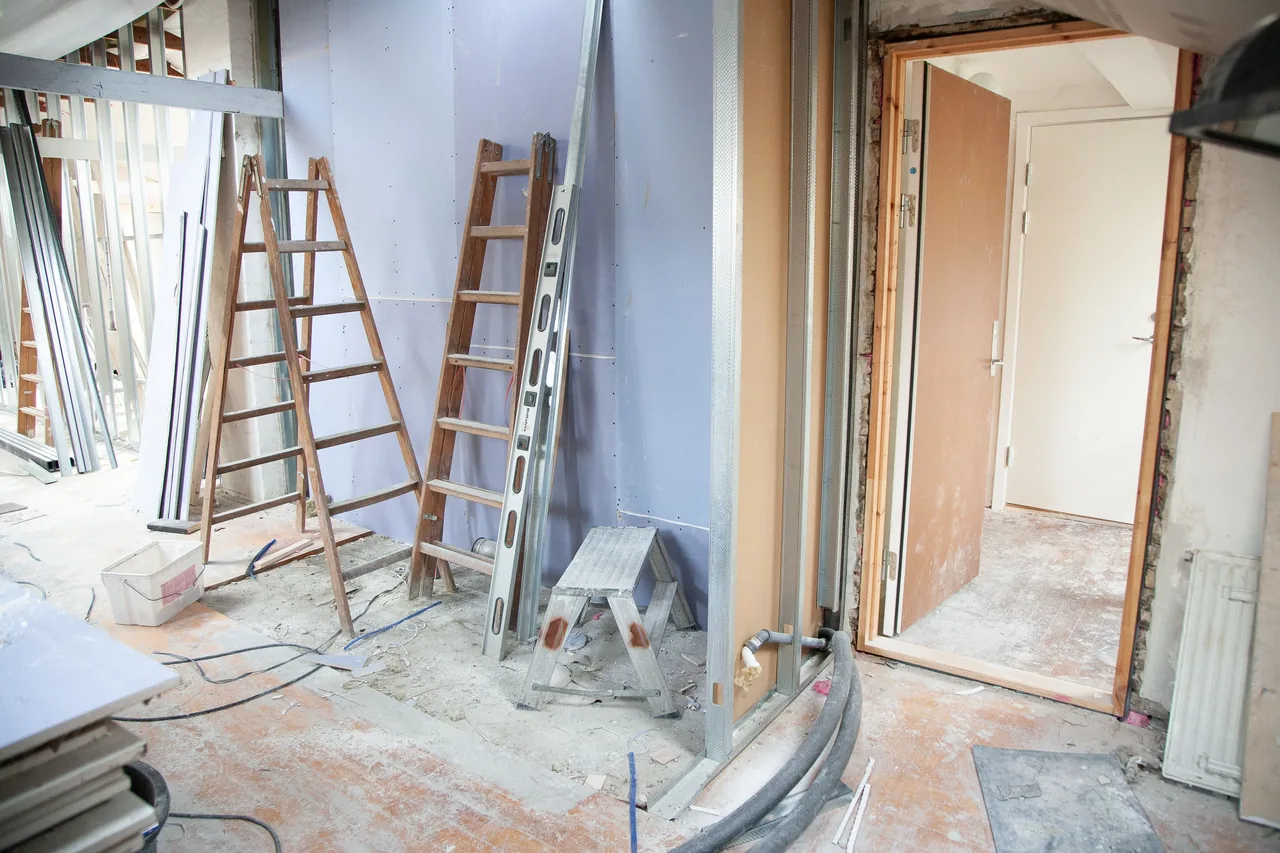
Drywall repair in Florida is a moisture-source problem before it is a patching problem. The brown ceiling stain, the soft wall behind the vanity, the crack that keeps coming back — in this climate they almost always trace to water or movement: a roof leak, window intrusion after a storm, AC condensation, a plumbing leak, or seasonal settling. Patch over the surface without fixing the cause and the stain bleeds back through the paint, or worse, mold keeps growing in the cavity behind a wall that looks repaired. The work that actually lasts in Florida corrects the source first, removes the saturated or moldy board, checks the cavity, replaces it with the right moisture-rated panel, and then matches the knockdown texture so the repair disappears.
Watch
See Drywall Repair Done Right in Florida
What Drywall Repair Covers, and Why the Cause Comes First in Florida
Drywall repair ranges from a nail hole to a storm-soaked ceiling, but the principle is the same in Florida: find out why the wall failed before you close it back up. A patch is only as good as the cause behind it, and in a humid climate the cause is usually water. Here is the range we handle.
- Water stains and leaks — brown or yellow stains from roof, window, AC, or plumbing water; the source is corrected, then the board
- Storm and hurricane damage — wind-driven rain intrusion, soaked drywall, and saturated insulation after a named storm
- Cracks — seam, corner, and stress cracks from settling and movement, reinforced rather than skimmed over
- Holes and dents — doorknob holes, furniture impacts, and failed anchors patched and blended
- Mold-affected board — drywall that has been wet long enough to grow mold, removed and rebuilt with mold-resistant board
Stain That Keeps Coming Back?
Free in-home assessment, moisture-source trace, and a repair plan that fixes the cause — written estimate, no pressure.
Why Florida Drywall Fails: Moisture and Movement
Two forces account for nearly every drywall repair in Florida. The first is moisture, which is everywhere in this climate, and the second is movement, as homes settle and materials expand with the heat and humidity. Knowing which one caused your damage decides how it gets fixed.
- Roof and window leaks — Florida storms drive rain into roof penetrations and around windows, soaking ceilings and the tops of walls
- AC condensation — air handlers, ducts, and condensate lines that drip leave stains and feed mold in closets and ceilings
- Plumbing leaks — slow leaks behind vanities, tubs, and kitchen walls saturate the board and the framing
- Seasonal movement — settling and humidity-driven expansion open seam and corner cracks, especially over doors and windows
- Flood and storm surge — ground-floor walls wicking water after a flood need the lower board removed and replaced
Mold Behind the Wall: The Florida Repair Step Most Crews Skip
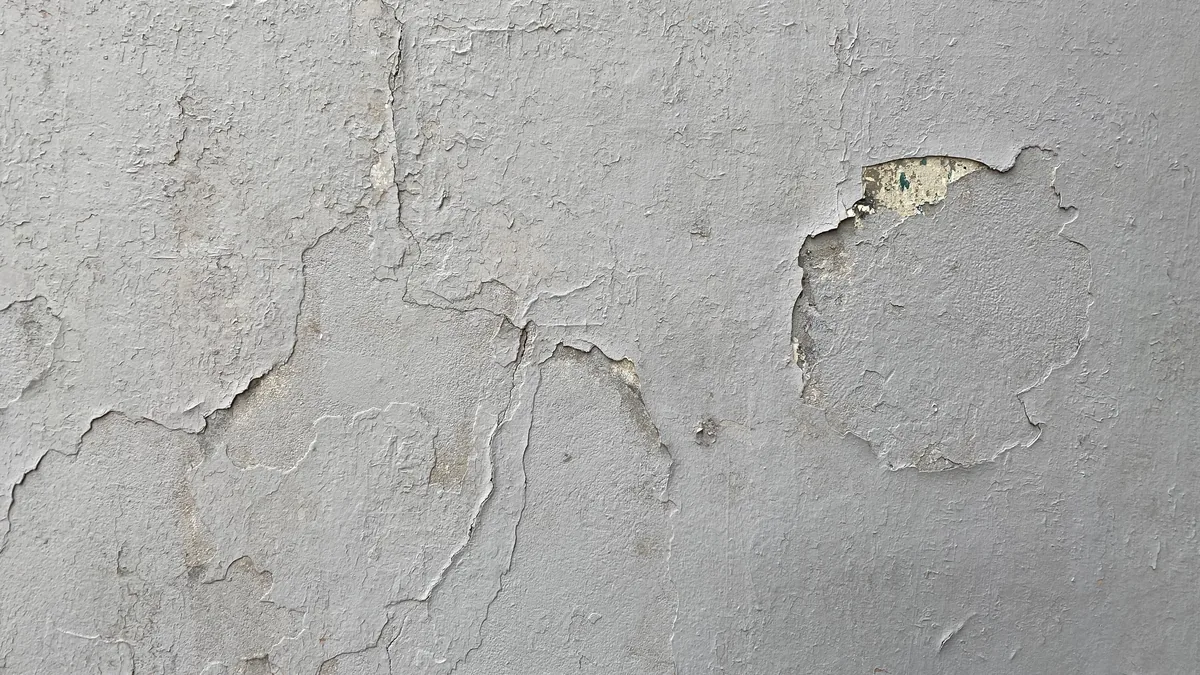
In humid Florida, a wall that has been wet for any length of time can grow mold inside the cavity — out of sight, behind paint that looks fine. A repair that skims over the surface without opening the wall traps that mold in place. The right process removes the saturated board and insulation, exposes and checks the cavity, and addresses any mold before new board closes it up.
- Saturated drywall and wet insulation removed, not dried in place and covered
- The cavity checked for mold, with proper remediation coordinated when the growth is significant
- The framing allowed to dry before new board goes in, so moisture is not sealed inside the wall
- Rebuilt with mold-resistant board in the affected area so the same spot resists a repeat
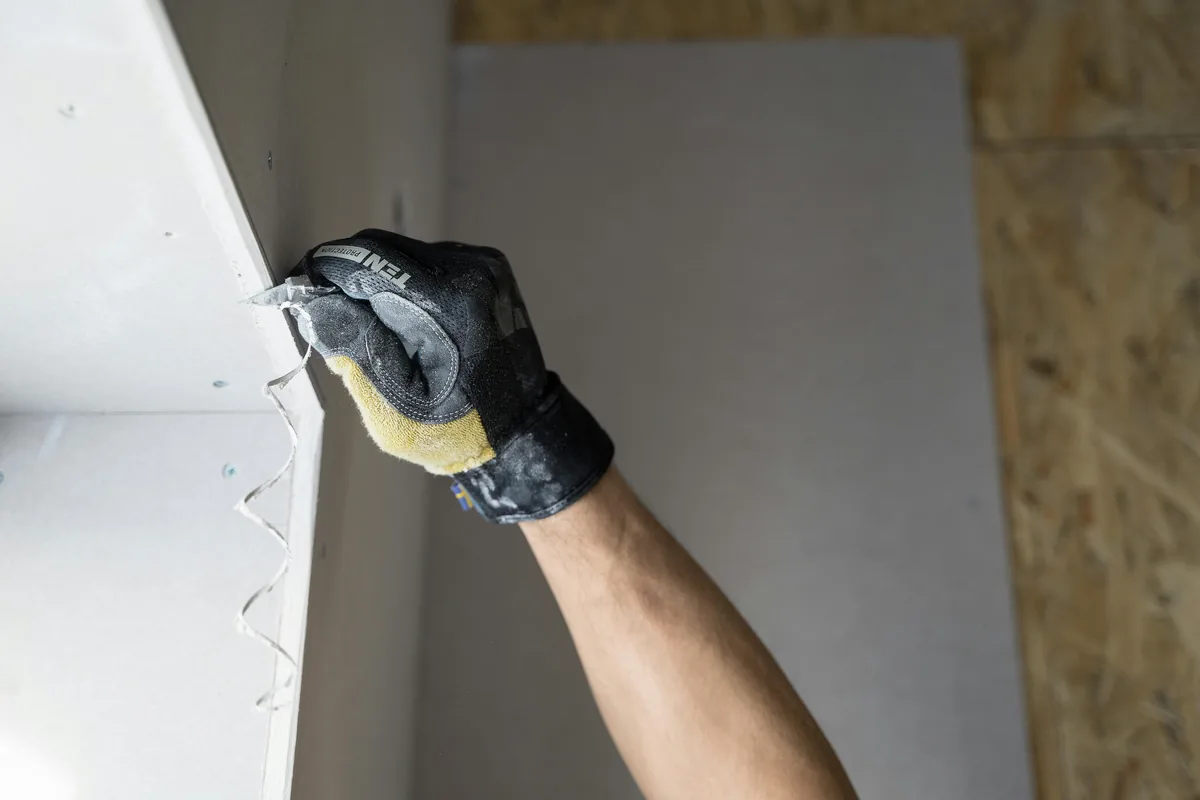
Texture Matching: How a Florida Repair Disappears
The reason a bad repair stands out is texture, not paint. Nearly every Florida wall and ceiling wears a sprayed knockdown or orange-peel finish. Drop a smooth patch into that wall and it reads as an island no matter how carefully it is painted. A repair that disappears is sprayed and knocked down to match the surrounding texture, then feathered, primed, and painted.
We match the texture on every repair so the fix blends into the wall, and on a surface with heavy color fade or a hard-to-match sheen, we will tell you when repainting the full wall corner to corner gives the most invisible result. See our wall texturing service
Cracks That Keep Coming Back: Fixing the Cause, Not the Symptom
A crack that returns in the same spot is telling you something. Recurring cracks are almost always movement or a finishing shortcut — a seam that was not properly taped, a corner with no reinforcement, or a joint over a door that flexes. Skimming joint compound over it hides the line for a season, then it opens again.
We reinforce the joint correctly — tape, bed, and feather — so the repair moves with the wall instead of cracking along it. Where the crack signals a structural cause rather than a finishing one, we tell you so the underlying issue can be addressed instead of repeatedly patched.
Storm and Water-Damage Wall Repair
Storm-damage repair is core Florida work, and it is more than hanging new board. After wind-driven rain or a flood, the wall is only the visible part of the problem — the intrusion path, the saturated insulation, and any mold all have to be handled for the repair to last. We correct the source, strip out the wet material, check for mold, and rebuild with moisture- or mold-resistant board, then re-texture and repaint so the finished wall matches the room.
The goal is a wall that comes back better than it was — so the next storm is a smaller event.
Our 6-Step Drywall Repair Process
Every Pro Work drywall repair follows the same six-step framework — built to fix the cause and make the repair invisible in a Florida home.
- Free assessment. We inspect the damage, trace it to its source — leak, condensation, storm, or movement — and check for mold or soft, saturated board. No commitment.
- Written estimate. Line-item breakdown — moisture correction, board replacement, finishing, texture match, and timeline. Delivered after the visit.
- Correct the moisture source. Fix or coordinate the leak, condensation, or intrusion that caused the damage so the repair does not fail again.
- Remove damaged board & check for mold. Cut out the saturated or moldy drywall and insulation, address any mold, and let the cavity dry before new board goes in.
- Replace, finish & texture-match. Hang new moisture- or mold-resistant board, tape and finish the seams, then spray and knock down the texture to match the surrounding wall.
Fix the Cause, Hide the Repair
Fast reply. Experienced crews. Source-first repair. Texture matched so the fix disappears.
How to Identify a Qualified Florida Drywall Repair Crew
A fast patch over a wet wall is the most common way a Florida repair fails. Verify all of the following before signing anything:
- Traces the moisture source first
- A qualified crew finds out why the wall failed before patching. If the plan is to paint over a stain without addressing the leak, the stain comes back.
- Opens the wall and checks for mold
- Water-damaged drywall can hide mold in the cavity. A reputable repair removes the saturated board and checks behind it rather than skimming over it.
- Rebuilds with the right board
- The repaired area should go back in with moisture- or mold-resistant board where moisture is the cause — not the same standard gypsum that failed.
- Matches the texture
- Florida walls are textured. The crew should spray and knock down the patch to match so the repair blends instead of standing out as a smooth island.
Florida Drywall Repair Case Study
Our Installation Standards
Every Pro Work drywall repair meets these installation standards:
- Source-corrected repair
- We fix or coordinate the moisture cause before closing the wall, so the repair does not bleed back — the step that separates a lasting fix from a cover-up.
- Mold-checked & texture-matched
- The cavity checked for mold and the texture matched to the surrounding wall — the steps that prevent the hidden mold and visible patches Florida is known for.
Why Florida Homeowners Choose Pro Work for Drywall Repair
Most crews patch the surface and move on. We treat the cause as the project. The same crew that matches your texture also traces the leak, checks for mold, and rebuilds with the right board — so the repair lasts and disappears.
- Source-first, every time. We fix why the wall failed, not just the stain you can see.
- Mold checked before we close the wall. The most-skipped step, and the one that causes the most repeat failures in Florida.
- Free in-home assessment. On-site inspection, source trace, line-item breakdown, no high-pressure sales tactic.
- Texture-matched finish. Knockdown or orange-peel matched so the repair blends into the wall.
- Scope and materials documented for storm and water-damage claims.
Related Wall Work We Coordinate
A drywall repair in Florida often pairs with refinishing the surrounding wall. We hold it under one crew so the result is seamless:
- Wall Texturing — knockdown or orange-peel sprayed and matched on the patch.
- Interior Painting — repaint the wall corner to corner for a fully invisible repair.
- Drywall Installation — when an entire wall or room is past patching.
- Shower Tile & Waterproofing — when the moisture source is a failed wet-area assembly.