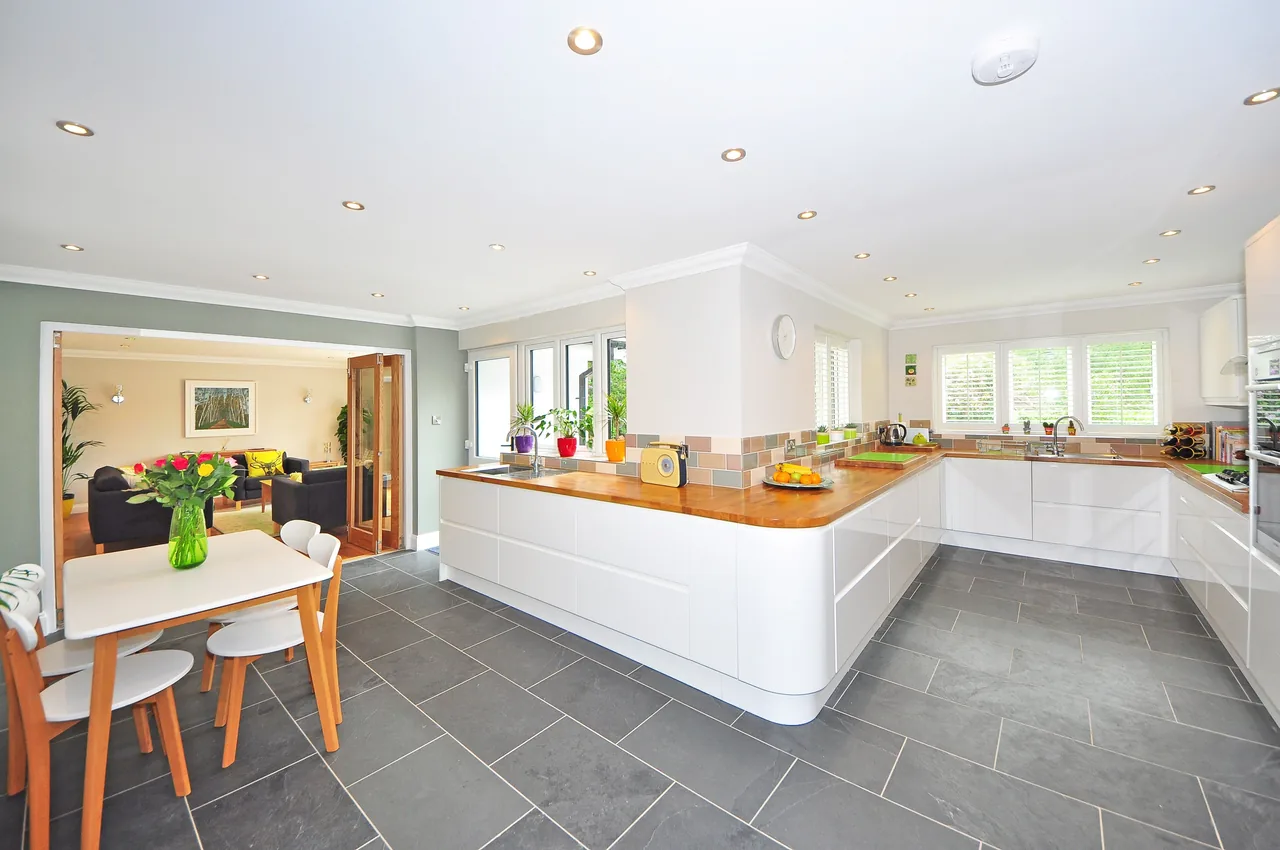
Tile in Florida is a waterproofing and substrate problem before it is a style problem. Most homes here sit on concrete slab-on-grade — poured directly on the ground with no crawlspace — so vapor rises through the slab year-round and the slab itself moves seasonally, while outdoor relative humidity routinely sits above 70%. Set tile straight onto a bare, moving slab with no uncoupling membrane and the rigid tile cracks when the concrete shifts; tile a Florida shower with no bonded waterproofing behind it and you grow hidden mold in the wall cavity within a year. The TCNA Handbook and ANSI standards govern how a tile assembly is built, the FBC governs wet-area waterproofing and shower slope, and in coastal South Florida the High-Velocity Hurricane Zone (HVHZ) adds product-approval rules. We spec every job to three Florida realities most setters ignore: slab movement, concealed moisture and mold, and wet-area slip safety
Watch
See Tile Done Right in Florida
Why Florida Tile Is Different
- The slab moves, and rigid tile does not. Florida slab-on-grade expands, contracts, and shifts with moisture and curing. A bonded uncoupling membrane (such as a Schluter sheet) isolates the tile from that movement so seasonal slab shift does not telegraph into cracked tile and broken grout lines.
- Waterproofing lives behind the tile. Tile and grout are not waterproof — water passes through grout joints. In a Florida shower or wet wall, the real water barrier is the bonded membrane or board behind the tile. Skip it and moisture saturates the wall cavity, where year-round humidity feeds mold you cannot see until it smells.
- Humidity attacks the grout. Standard cement grout in a humid Florida bathroom stays damp, then breeds mildew and breaks down at the joints. Epoxy or sealed grout resists the moisture, staining, and mildew that destroy ordinary grout in this climate.
- Wet floors must be slip-rated. Tracked-in sand, pool drips, and bathroom water make slip resistance a safety spec, not a preference. We select tile by DCOF (wet slip) and PEI (abrasion/traffic) ratings so a Florida floor is both durable and safe underfoot.
The 6 Pillar Tile Services
-
Floor Tile
Porcelain and ceramic floor tile set over an uncoupling membrane on Florida slab-on-grade — handles humidity, tracked-in sand, and standing water. Specified by traffic and wet-slip rating with movement joints per TCNA guidance.
-
Shower Tile
Full Florida shower systems built behind the tile: bonded waterproofing membrane, code-driven slope-to-drain, and slip-rated tile. The membrane you never see is what stops mold in a high-humidity climate.
-
Bathroom Tile
Whole-bathroom tiling — floors, walls, wet areas — waterproofed and grouted for humid Florida baths. Mold-resistant grout and proper substrate stop the mildew and loose tile that plague poorly built bathrooms here.
-
Porcelain Tile
Low-absorption porcelain — the Florida workhorse for wet areas and high humidity. Dense, stain-resistant, and flood-recoverable, set with the right thinset and uncoupling so slab movement never reaches the tile.
-
Wall & Backsplash Tile
Bathroom walls and kitchen backsplashes that resist Florida humidity and splash. Waterproofing behind wet walls prevents hidden mold; sealed grout keeps mildew off the joints.
Tile Repair & Regrouting
Cracked, loose, or hollow tile in Florida usually traces to slab movement or moisture — we fix the substrate, not just the tile. Regrouting and resealing refresh humid showers where grout has failed.
Not Sure What Your Tile Job Actually Needs?
Free in-home visit, substrate and waterproofing assessment, and a tile recommendation matched to your room and traffic — written estimate, no pressure.
All 15 Tile Services
Floor, Wall & Wet Areas
Floor Tile
PEI 4–5, slip-rated
Floor Tile EstimateWall Tile
waterproofed wet walls
Wall Tile EstimateShower Tile
bonded membrane, slope-to-drain
Shower Tile EstimateBathroom Tile
full wet-room build
Bathroom Tile EstimateBacksplash Tile
kitchen & bath, sealed grout
Backsplash Tile EstimateTile Materials
Porcelain Tile
low-absorption workhorse
Porcelain Tile EstimateCeramic Tile
cost-effective, sealed grout
Ceramic Tile EstimateNatural Stone Tile
travertine, sealed for FL
Natural Stone Tile EstimateMarble Tile
honed, pH-neutral care
Marble Tile EstimateMosaic Tile
accents, epoxy grout
Mosaic Tile EstimateCustom Tile Design
niches, patterns, layouts
Custom Tile Design EstimateRepair, Regrout & Grout Care
Tile Repair
cracked, loose, hollow
Tile Repair EstimateTile Regrouting
refresh failed grout
Tile Regrouting EstimateGrout Cleaning
mildew & hard-water film
Grout Cleaning EstimateGrout Sealing
block moisture & mold
Grout Sealing EstimateFlorida Tile Specs That Matter
Pricing depends on tile material, square footage, substrate prep, and waterproofing scope, and we deliver a free written estimate after an in-home visit. What actually determines whether a tile job lasts in Florida is the assembly — the membrane, the thinset, the grout, and the slip rating — not the sticker on the box. Match these to your room before you choose a tile.
| Material / Area | Water Behavior | Key Florida Spec | Typical Install |
|---|---|---|---|
| Porcelain tile | ≤ 0.5% absorption | PEI 4–5 floors; DCOF ≥ 0.42 wet | 3–6 days |
| Ceramic tile | 3–7% absorption | Walls & light-traffic floors; sealed grout | 2–5 days |
| Natural stone / travertine | Porous | Penetrating sealer; salt-air rated coastal | 3–6 days |
| Marble tile | Porous, acid-sensitive | Honed for slip; pH-neutral care, sealed | 3–6 days |
| Shower / wet wall | Membrane-dependent | Bonded waterproofing; slope-to-drain per FBC | 4–7 days |
| Floor over slab | Movement-dependent | Uncoupling membrane; movement joints | 3–6 days |
| Mosaic accent | Joint-heavy | Epoxy grout; sheet-mounted layout | 1–3 days |
| Cement grout vs epoxy | Sealed vs waterproof | Epoxy for wet areas; sealed cement elsewhere | Same-job |
PEI = abrasion/traffic rating · DCOF = wet slip resistance (AcuTest ≥ 0.42 for wet areas) · TCNA = assembly standard · uncoupling membrane = anti-fracture layer that isolates tile from slab movement.
Brand & Material Authority
- Daltile / MSI / Florida Tile porcelain & ceramic
- Schluter uncoupling & waterproofing systems
- Laticrete / Mapei thinset, membranes & grout
- Custom Building Products setting materials
- Bostik epoxy & pre-mixed grout
- Wedi / GoBoard waterproof backer board
- Marazzi / Emser porcelain & stone-look
- Dal-Tile Travertine / Marble natural stone
Room-by-Room Coordination
- Bathroom + shower tile + bathroom tile. A Florida wet room needs a bonded waterproofing membrane, code slope-to-drain, and slip-rated floor tile. We tie the shower, walls, and floor into one continuous water barrier so moisture has nowhere to migrate.
- Kitchen + backsplash tile + floor tile. A sealed backsplash protects the wall from splash and humidity, while a PEI 4–5 floor handles spills and traffic. One crew sets both on one schedule.
- Whole-home floors + porcelain tile + uncoupling membrane. Older Florida slabs move and are rarely flat. An uncoupling membrane over a leveled slab protects the tile from seasonal shift before a single piece is set.
- Flood recovery + tile repair + regrouting. After a hurricane or slab leak, we correct the moisture source, repair the substrate, and reset porcelain or reseal grout so the next storm is a mop-up, not a teardown.
Our Installation Standards
- Florida Building Code compliance
- Wet-area waterproofing and shower slope-to-drain installed to FBC requirements, with HVHZ product-approved materials where coastal South Florida requires them.
- Waterproofed & uncoupled assemblies
- Bonded membranes in wet areas and uncoupling membranes over slab — the steps that prevent the hidden mold and cracked tile Florida is famous for.