Watch
Lakewood Ranch & Sarasota Wide-Plank Flooring Guide
The Lakewood Ranch Look
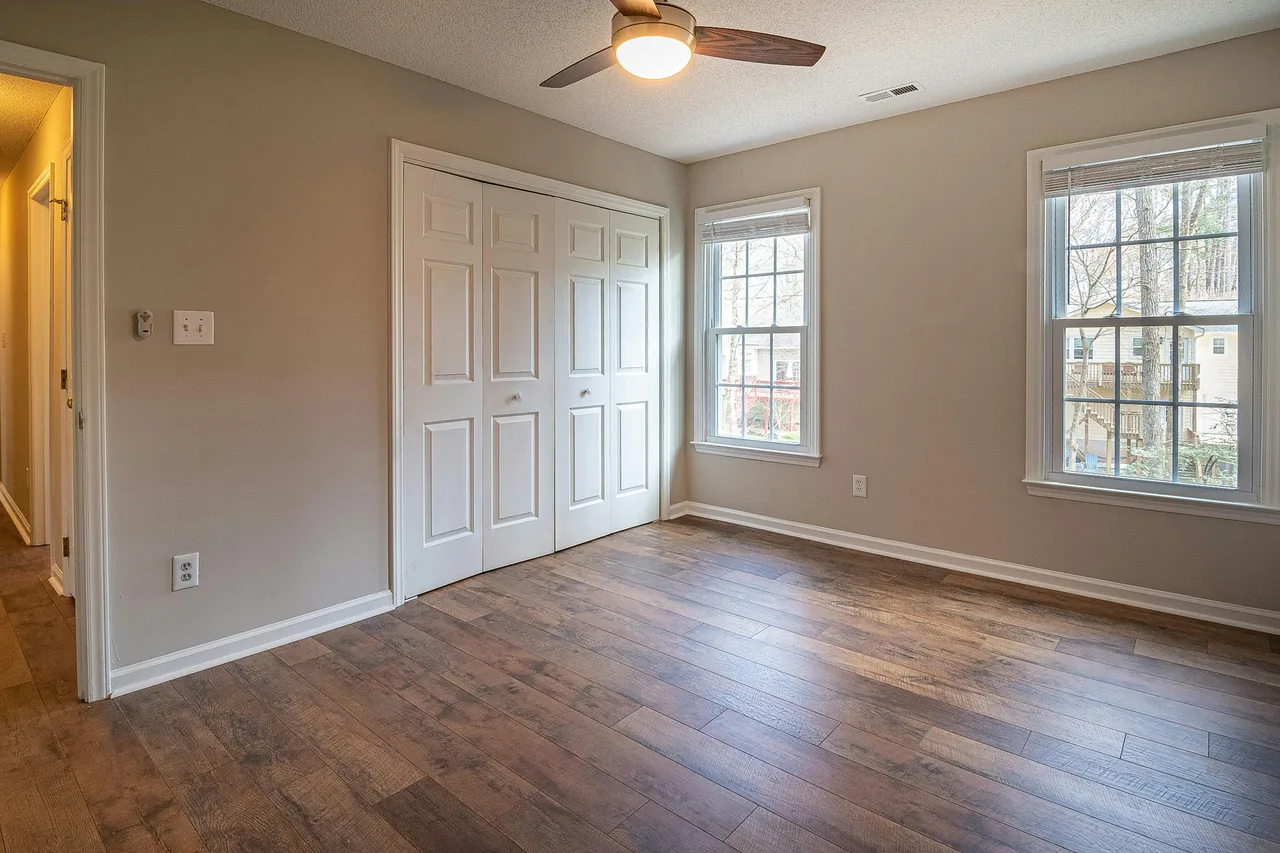
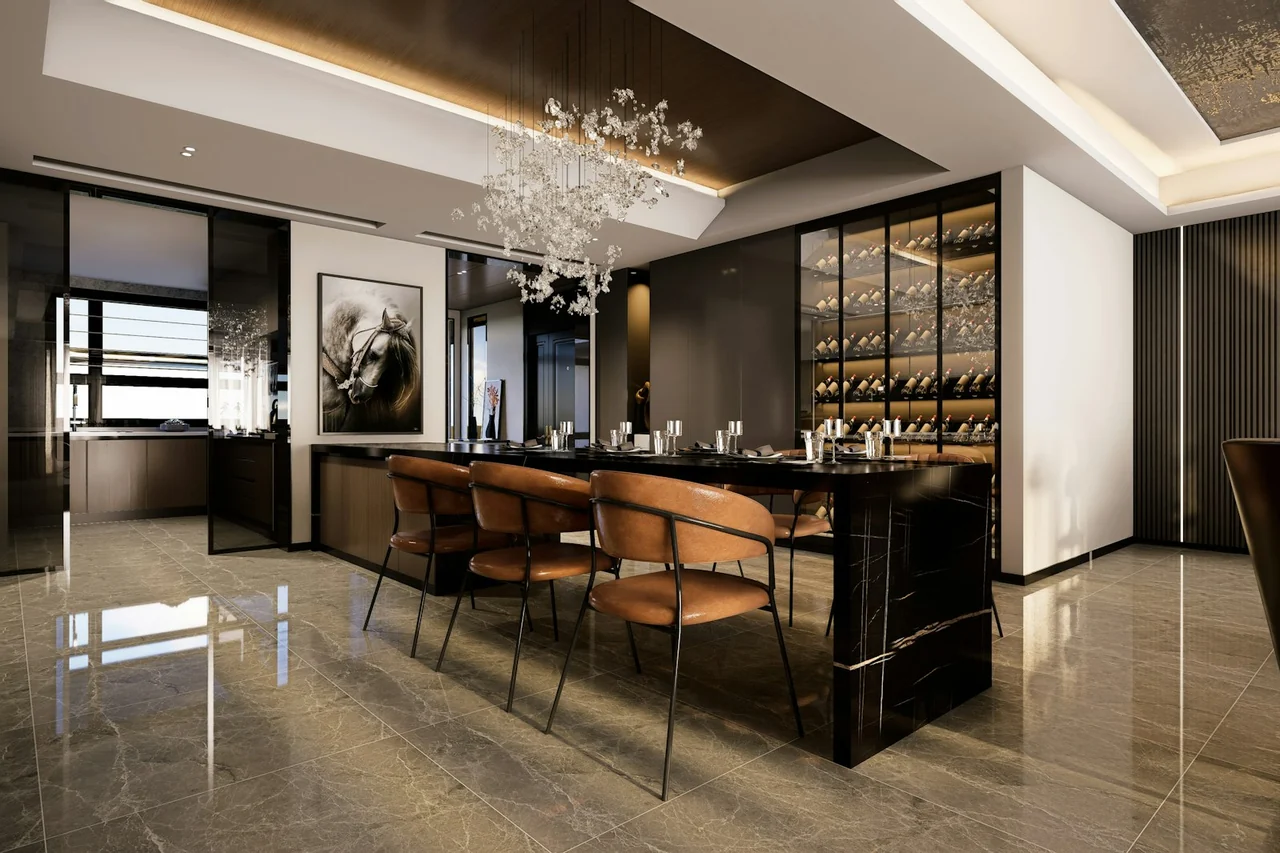
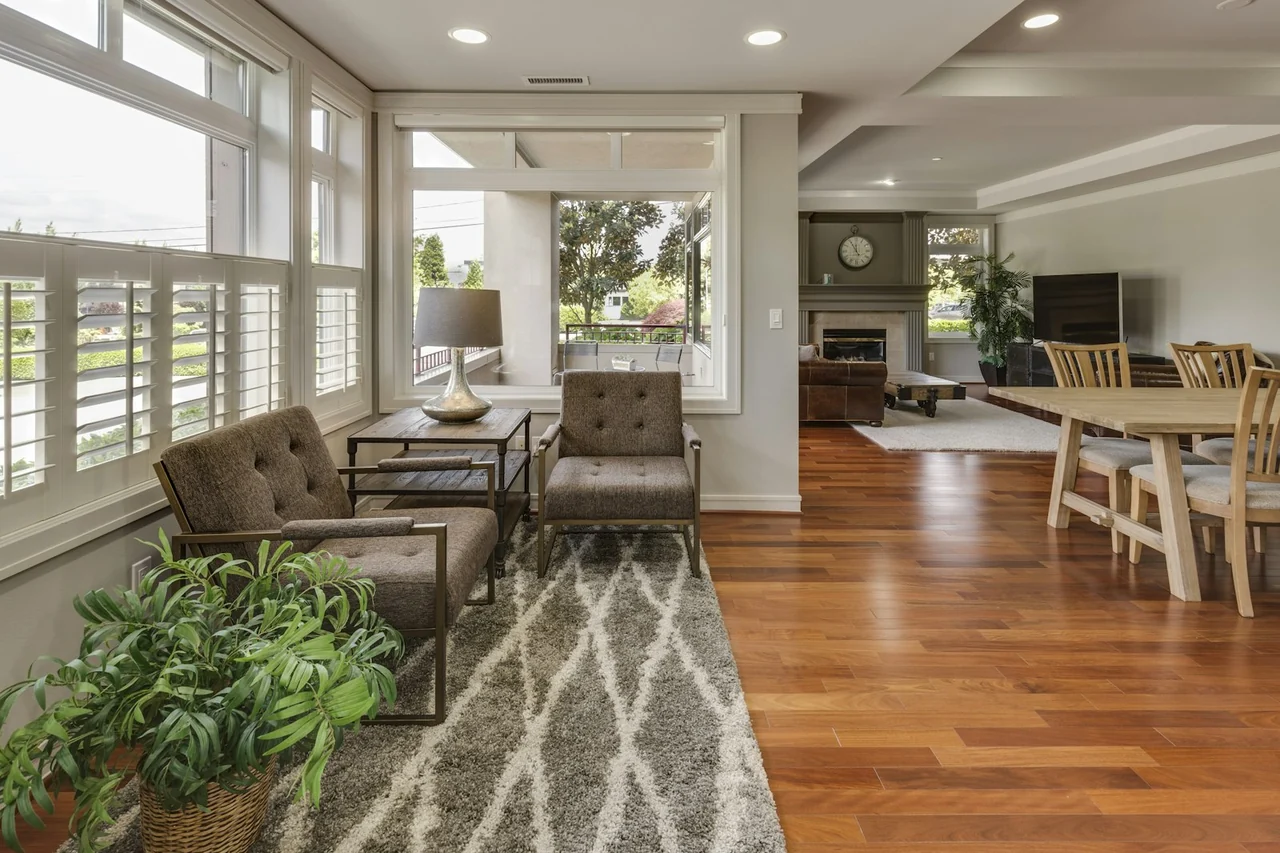
The signature floor across the Sarasota-Bradenton luxury market is a wide plank — a board 5 in or wider — in a light blonde, ash, or natural-oak tone with a low-sheen matte finish. In Lakewood Ranch, Longboat Key, and the gated villages south toward Sarasota, the coastal-modern palette has pushed planks to 6, 7, and even 9 in wide, where the long, calm grain reads as airy and open.
That look is achievable here. The mistake is treating it as purely a style choice. In a hot, humid, slab-on-grade state, plank width is also a mechanical decision, and the product that delivers the wide look without failing is rarely solid wood. Lakewood Ranch is a 33,000-acre master-planned community straddling Manatee and Sarasota counties, and nearly all of its homes sit on a concrete slab poured directly over Florida sand — which is exactly the condition that makes width matter.
Why this guide is Florida-specific
A generic wide-plank roundup will tell you about color and grain. It will not tell you that a 7 in board moves nearly three times as much across its face as a 2¼ in strip for the same change in humidity, or that a slab emitting vapor will undo any width you choose. This guide ties the on-trend look to the dimensional math that governs whether it lasts.
Why Plank Width Is a Stability Decision
Wood moves with moisture, and it moves almost entirely across the grain — across the width of the board, not the length. A plank swells when the air is humid and shrinks when it is dry. The percentage of movement is set by the species, but the absolute seasonal movement you actually see and feel scales with the width: the same percentage acting across a 7 in face produces a far bigger gap than across a 2¼ in face.
The arithmetic of a wide board
Movement is proportional to width, so a board three times wider moves roughly three times as far in absolute terms for the same humidity swing. A hairline change that disappears in a narrow strip becomes a visible winter gap or a lifted summer edge in a wide plank. This is the single most important fact behind every wide-plank failure in Florida.
What Florida adds to the equation
Florida runs high indoor relative humidity for much of the year, and slab-on-grade construction feeds moisture vapor up from the soil into the back of the floor. That gives a wide board two moisture sources — the air above and the slab below — and both push it to swell. The wider the plank, the more dramatically that swelling shows up as cupping or edge lift.
Movement shows up two ways
Seasonal change in a wide solid floor surfaces as winter gapping (dry season, boards shrink and pull apart) and summer cupping (humid season, board edges rise above the center). Both are width-amplified. Choosing the construction that suppresses movement is how you keep a 7 in plank looking like the showroom sample three summers in.
Engineered vs Solid Wide Plank
For a wide plank on a Florida slab, engineered wood is the default and solid is the exception. Engineered wood bonds a real hardwood top veneer to a cross-laminated plywood core; the layers run in alternating grain directions, so they restrain each other and the board moves far less. The NWFA notes engineered construction can be up to twice as dimensionally stable as solid under the same humidity change.
Why cross-ply beats a solid board in width
A solid plank is one piece of wood, free to swell across its full width. An engineered plank's core plies pull against each other, canceling most of that movement before it reaches the surface. The wider the board, the more that restraint matters — which is precisely why the luxury wide look should be engineered here, not solid.
| Attribute | Solid wide plank | Engineered wide plank |
|---|---|---|
| Dimensional movement | High — full board swells | Up to ~2× more stable (cross-ply) |
| Over a slab on grade | Not recommended at width | Designed for it |
| Max practical width here | ~5 in, quarter-sawn only | 6-9 in routinely |
| Refinish potential | Many times | Tied to wear-layer thickness |
| Install method | Nail/staple to wood subfloor | Glue-down or float on slab |
The table makes the trade explicit: solid can be refinished more often, but in a wide board over a Florida slab that advantage is buried by movement. Engineered gives the look, the width, and the stability the climate demands. We cover the layer-by-layer reasons in the engineered-versus-solid breakdown for humid climates.
When solid still makes sense
Solid wide plank is not banned — it is situational. Above grade (a second story over conditioned space, never directly on a slab), in a narrower 4-5 in width, milled quarter-sawn, and in a home with tight year-round humidity control, a solid floor can perform. That is a real subset of Sarasota-area homes, and our solid hardwood installation serves it — but it is the exception, not the wide-plank default.
Wide-Format Rigid LVP: The No-Movement Option
The third path skips wood movement entirely. Rigid wide-format LVP — luxury vinyl plank on a stone-composite (SPC) core — is manufactured in wide formats that print a convincing blonde-oak grain and carry a hand-feel bevel. Because the core is mineral, not wood, it does not respond to humidity, so width carries no stability penalty at all.
Where rigid LVP wins in Lakewood Ranch
For ground-floor open plans, lanais that get enclosed, rental and seasonal properties, and any home where the owner does not want to manage humidity, wide-format LVP delivers the wide light look with zero seasonal movement and full waterproofing. It is the lowest-risk way to get a 7 in plank onto a slab.
- Stability: mineral core ignores humidity, so wide planks stay flat year-round.
- Water: waterproof through the body, unlike any wood product.
- Install speed: floats over a flat, dry slab with minimal disruption.
- Look: wide-format boards with matte, wire-brushed blonde-oak visuals.
The honest trade-off is that LVP is a printed surface, not real wood, and cannot be sanded and refinished — so the decision is real-wood character and refinishability against movement-free certainty. Our wide-format rigid LVP installation is the pick when certainty wins.
The two-question filter
Ask two things: does the room sit on a slab, and will indoor humidity stay tightly controlled? If it is on a slab and humidity is anything but tightly controlled, rigid LVP or engineered wide plank is the answer — solid wide plank is not.
Species, Cut, and Finish
Within wood, three choices shape how a wide plank behaves in Florida: the species, the way the log was cut, and the surface finish. Get these right and a wide engineered floor is calm and durable; get the cut wrong and even engineered can telegraph movement at the surface.
White oak is the default species
White oak dominates the Sarasota wide-plank look for good reason: it is moderately hard (Janka 1,360 lbf), its closed-pore structure resists moisture better than red oak, and it takes the light, raw, blonde finishes the coastal-modern palette wants. It is the species we reach for most in wide engineered planks here.
Quarter-sawn and rift-sawn move less
How the board is cut from the log changes its movement dramatically. Quarter-sawn and rift-sawn boards are cut so the growth rings run nearly perpendicular to the face, which makes them shrink and swell far less across the width than a plainsawn board. In a wide plank — solid or as an engineered veneer — a quarter-sawn or rift cut is the stability upgrade that matters most.
- Plainsawn (flat-sawn)
- Cheapest yield and the boldest cathedral grain, but the most width-wise movement. Acceptable as an engineered veneer; risky in solid at width.
- Rift-sawn
- Long, straight, uniform grain with low movement. A premium look that suits wide coastal planks.
- Quarter-sawn
- The most dimensionally stable cut, with subtle ray flecking. The safest choice for the widest boards.
Finishes that fit the palette
The coastal-modern look leans on low-sheen, light, raw-looking surfaces rather than glossy film. A few finishes carry that look while affecting how the floor repairs and ages.
- UV-cured matte: a durable factory film with almost no shine, the most common wide-plank finish here.
- Wire-brushed: lightly textured to expose grain, hiding micro-scratches and Florida sand traffic.
- Penetrating oil: a natural raw look that allows spot-repair without sanding the whole floor.
The finish does not stop movement, but pairing the right cut with the right finish is how a wide plank both reads coastal-modern and ages gracefully.
The Slab and Acclimation
No width, species, or core survives a wet slab or a skipped acclimation. The two non-negotiables before any wood goes down in Lakewood Ranch or Sarasota are a moisture-tested slab and flooring acclimated to the home's in-service conditions — not a calendar countdown.
Test the slab first
Slab-on-grade concrete emits moisture vapor from the soil below. Before installation, the slab's internal relative humidity should be measured per ASTM F2170 (in-situ probes drilled to 40% of slab depth) and, where specified, surface emission per ASTM F1869 (calcium chloride). Engineered wood and its adhesive carry published moisture ceilings; exceed them and even a stable wide plank will cup. The full procedure lives in our Lakewood Ranch new-build slab guide, which applies to wood as much as tile.
Acclimation is moisture matching, not waiting
Acclimation means bringing the flooring's moisture content into balance with the home as it will actually be lived in — air conditioning running, doors closed. The NWFA target is a service environment of 30-50% relative humidity, with the flooring's moisture content within 2 percentage points of the subfloor. Acclimating to a hot, un-conditioned, just-built house guarantees the floor shrinks once the AC runs.
- Step1
Condition the house
Run the HVAC to the home's normal set point for days before delivery so the indoor RH sits in the 30-50% band.
- Step2
Test the slab
Confirm in-slab RH with ASTM F2170 probes and verify the reading is under the flooring and adhesive moisture ceiling.
- Step3
Match moisture
Meter the planks and subfloor; install only when the flooring is within 2 percentage points of the subfloor moisture content.
Those three steps are the difference between a wide plank that stays tight and one that opens up in its first dry season. Skipping them is the most common reason a beautiful Sarasota wide floor fails, regardless of how good the boards were.
Pick Your Wide-Plank Floor
Three products deliver the Lakewood Ranch wide look; the right one depends on the slab, the humidity discipline, and whether refinishability matters to you.
Choose by condition
- On a slab and humidity is not tightly controlled — choose wide-format rigid LVP for zero movement and waterproofing.
- On a slab and you want real wood — choose engineered wide plank, quarter- or rift-sawn white oak, glued or floated over a tested slab.
- Above grade with tight humidity control and you want maximum refinishing — solid wide plank is possible, kept to ~5 in and quarter-sawn.
- Unsure of the slab's moisture — stop and test (ASTM F2170) before choosing; the reading can rule out solid entirely.
For most Lakewood Ranch and Sarasota homes, that decision lands on engineered wide plank or rigid LVP — the two products built to carry a wide board across a Florida slab.
Free In-Home Estimate
Want the wide look without the warp?
A Pro Work Flooring project director tests your slab on site and recommends the engineered, solid, or rigid-LVP wide plank that fits your Lakewood Ranch or Sarasota home — in writing.
Where we install
We install wide-plank engineered oak, solid hardwood, and rigid wide-format LVP across Lakewood Ranch, Sarasota, Bradenton, Longboat Key, and the rest of Manatee and Sarasota counties. Start with the full flooring lineup, or go straight to the engineered wide-plank option most local homes land on. Whatever the room, the sequence holds: match the width to the construction, test the slab, and acclimate to how the home is really lived in.
Frequently Asked Questions
What is the best wide-plank flooring for a Lakewood Ranch home?
Does a wide-plank wood floor warp in Florida humidity?
Engineered or solid wide plank for a Sarasota home?
What plank width works on a Florida slab?
Is wide-plank LVP a good alternative to engineered wood in Manatee County?
What light wood tone fits the coastal-modern Sarasota look?
References & Sources
- National Wood Flooring Association (NWFA) — Installation Guidelines and Technical Standards. https://nwfa.org/
- ASTM F2170 — Standard Test Method for Determining Relative Humidity in Concrete Floor Slabs Using in situ Probes. https://www.astm.org/f2170-19a.html
- ASTM F1869 — Standard Test Method for Measuring Moisture Vapor Emission Rate of Concrete Subfloor Using Anhydrous Calcium Chloride. https://www.astm.org/f1869-22.html
- USDA Forest Products Laboratory — Wood Handbook: Wood as an Engineering Material (dimensional movement). https://www.fpl.fs.usda.gov/products/publications/several_pubs.php?grouping_id=100&header_id=p
- Florida Building Code. https://floridabuilding.org/