Watch
Florida Climate Zone 1 vs 2: Flooring by Region
What Zone Each Region Is
Florida is the only state split between the two hottest moist climate zones in the country. Zone 1A (Very Hot-Humid) covers the southern tip; Zone 2A (Hot-Humid) covers everything north of it. The boundary is set by the IECC and adopted into the Florida Building Code, Energy Conservation, so it is a published, county-by-county fact, not a regional opinion.
Which counties are Zone 1A
Zone 1A is the southern tip of the peninsula, and Miami is the U.S. Department of Energy reference city for the entire designation. The list grew by one county in the most recent code cycle, which is why a 2017-era guide can disagree with the current map.
- Miami-Dade County — the original Zone 1A anchor and DOE reference location.
- Broward County — Fort Lauderdale and the dense Atlantic corridor.
- Monroe County — the Florida Keys, the most maritime part of the state.
- Palm Beach County — added to Zone 1A under the 2021 IECC, adopted in the Florida code’s 8th Edition (2023).
Those four counties carry the only "Very Hot-Humid" label in the continental United States, which is the single fact that separates this article from a generic flooring guide.
Which counties are Zone 2A
Zone 2A holds the rest of the populated state. Orlando, Tampa, Jacksonville, Fort Myers, and the Panhandle cities all share the Hot-Humid designation, sitting one notch milder than the southern tip on the same moisture-heavy side of the map.
Both zones carry the A suffix, which means "moist." That single letter is why waterproof and dimensionally stable floors — tile and rigid-core vinyl — behave the same statewide. The number in front of the letter is what changes how reactive materials like wood survive.
Is Miami a Different Zone Than Orlando
Yes. Miami sits in Zone 1A and Orlando in Zone 2A, and the separation is real, not cosmetic. The two cities fall on opposite sides of a numeric threshold written into ASHRAE Standard 169, and that threshold is measured in cooling degree days — the metric that decides how hard a Florida floor’s environment is to control.
What a cooling degree day measures
A cooling degree day (CDD) counts how far and how long the outdoor temperature stays above a base point across a year. More CDD means more hours when the air conditioner, not the weather, is the only system controlling indoor humidity. Miami logs far more cooling degree days than Orlando every year.
The exact thresholds
Per ASHRAE Standard 169, the dividing line is precise: Zone 1A is defined as more than 9,000 cooling degree days (base 50°F), while Zone 2A spans 6,300 to 9,000. South Florida clears the 9,000 line; Central and North Florida sit below it.
Why the number translates to flooring risk
In the common base-65°F reporting, Zone 1A also corresponds to roughly fewer than 2,000 heating degree days and well over 5,000 cooling degree days. The practical translation: South Florida has essentially no heating season, so its indoor air leans on air conditioning for dehumidification nearly year-round. A wood floor lives inside whatever that system delivers.
Köppen vs the Energy Code Map
Two systems describe Florida’s climate, and they agree on the trend even though they use different inputs. The older Köppen climate classification sorts climates by temperature and rainfall patterns; the energy code sorts counties by degree days. For choosing a floor, the energy-code zone is the more useful of the two.
What Köppen says about Florida
Köppen places South Florida in a tropical band — tropical monsoon near the coast and tropical savanna inland — while the rest of the peninsula falls in a humid subtropical band. The farther south you go, the longer the warm, moist season runs and the shorter the dry window that lets indoor air, and a wood floor, settle down.
Why the energy-code zone wins for flooring
The Köppen map is excellent for describing vegetation and weather, but it is not tied to your parcel. The IECC and FBC zone is assigned by county, lines up with how your air conditioning is sized, and is the number a flooring manufacturer’s humidity warranty effectively assumes. When the two systems are compared for a flooring decision, they differ in inputs but point the same direction.
Three ways the two maps differ
- Granularity — Köppen draws broad bands; the energy code names your specific county.
- Inputs — Köppen uses temperature and precipitation; the energy code uses heating and cooling degree days.
- Use case — Köppen describes the outdoor climate; the energy code predicts the indoor load your HVAC — and your floor — must live with.
For everything that follows, the energy-code zone is the number that matters, because the floor lives indoors and the indoor environment is what the zone predicts.
Does the Zone Change the Flooring
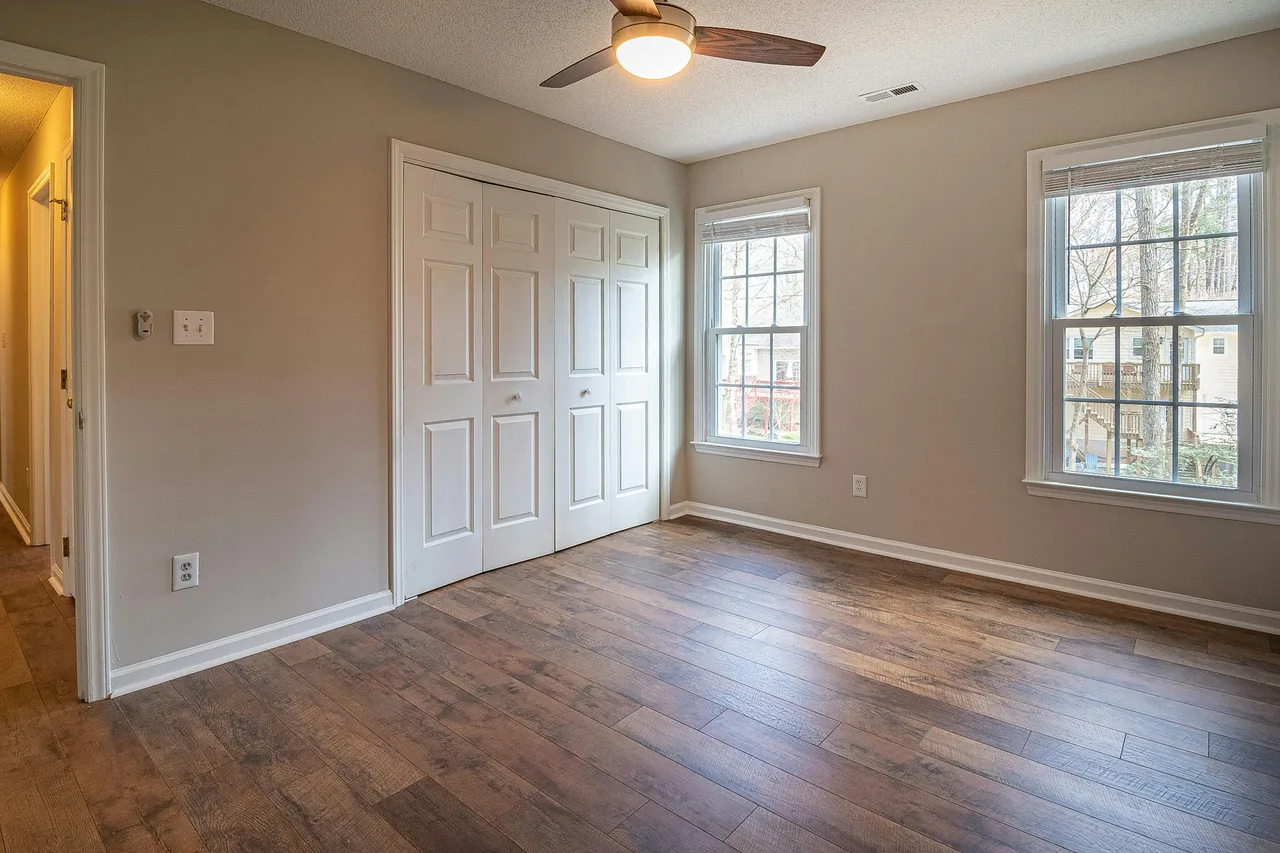
For waterproof floors, barely; for wood, decisively. Tile and rigid-core vinyl do not absorb water and do not move with relative humidity, so they are equally at home in Zone 1A and Zone 2A. The floors that care about the zone are solid hardwood and, to a lesser degree, engineered wood, because both exchange moisture with the air until they reach equilibrium.
Why wood is the one material that reacts
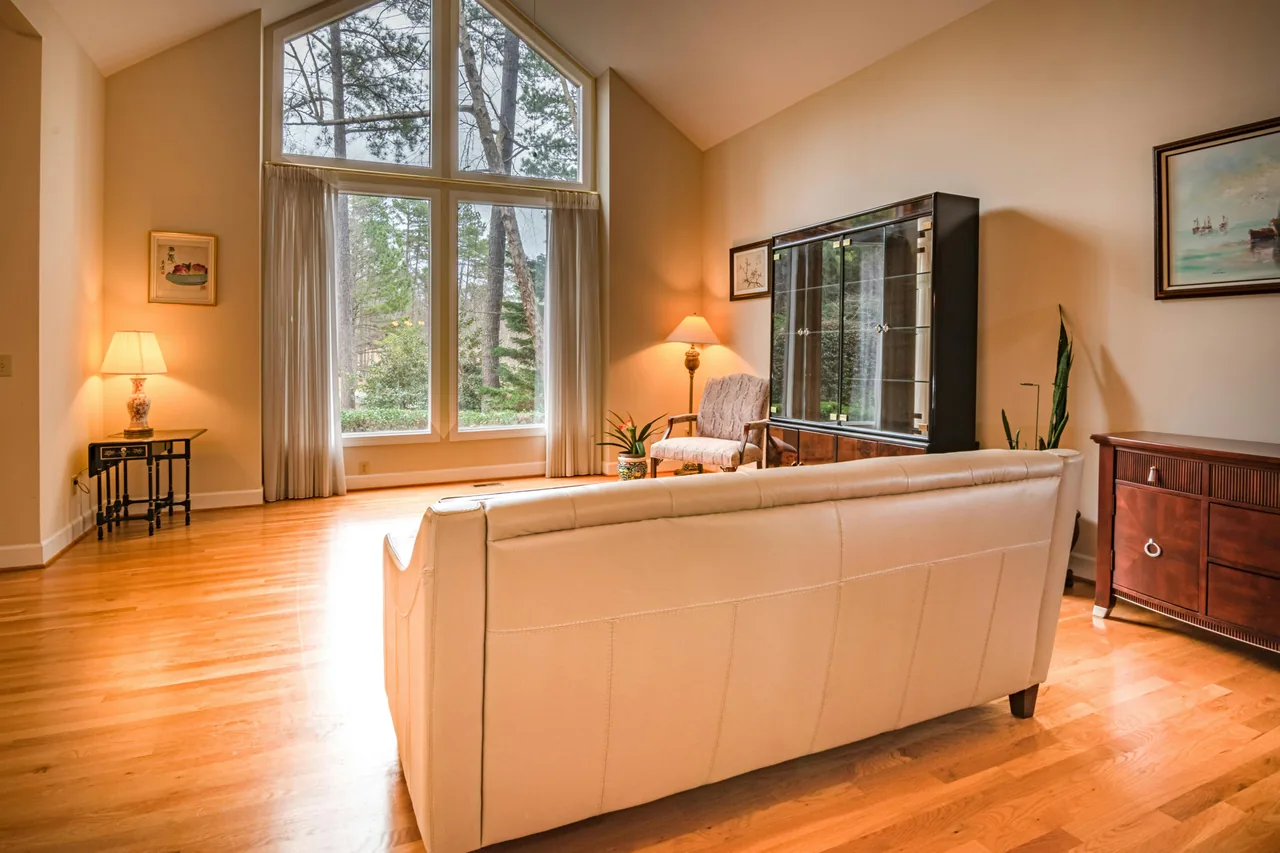
Wood is hygroscopic: it gains and loses moisture until its internal level matches the surrounding air, a state called equilibrium moisture content (EMC). The NWFA recommends keeping a wood-floored interior at 30 to 50 percent relative humidity and 60 to 80°F, which holds the wood near 6 to 9 percent moisture content. At 70°F and 40% relative humidity, that lands at about 7.7 percent.
| Flooring | Reacts to humidity? | Zone 1A (Miami) | Zone 2A (Orlando) |
|---|---|---|---|
| Porcelain / ceramic tile | No | Excellent | Excellent |
| Rigid-core SPC / WPC vinyl | Minimal | Excellent | Excellent |
| Engineered wood | Some — layered core resists movement | Workable with tight HVAC control | Good |
| Solid hardwood | High — full plank movement | Highest risk; demands constant AC | Manageable with care |
Read the table by column, not by row: the first two materials are flat across both zones, and only the bottom two change rating as you move south. That is the whole argument in four lines.
The structural reason engineered beats solid
A solid plank is one piece of wood, so it expands and contracts across its full width every time relative humidity moves. An engineered plank is a stack of thin plies glued with the grain running in alternating directions, plus a hardwood wear layer on top. The cross-grain construction fights itself: as one layer tries to swell, the layer beneath restrains it, so the whole plank moves a fraction of what a solid board would.
That stability is exactly what a humid, cooling-dominated climate rewards. It is why the same engineered wood floor we install is an easier recommendation in Orlando than in Key West, and why a solid hardwood floor in Zone 1A is less a product decision than a commitment to never turning the air conditioning fully off.
The 1A vs 2A Humidity Gap
The difference that matters for flooring is not peak humidity — both zones are brutally humid in August — but how often the indoor air leaves the safe band. Zone 2A gets a short, drier winter when outdoor dew points fall and homes may run no air conditioning for days. Zone 1A barely does; its latent moisture load runs nearly year-round, so the dehumidification job never stops.
Why the swing matters more than the peak
For a wood floor, the enemy is the swing, not the absolute number. A plank that equilibrates to a humid summer and then loses moisture during a dry, AC-off winter week will shrink and gap; the reverse will cup it. Zone 1A’s near-constant humidity is, counterintuitively, stable — as long as the air conditioning runs continuously. The danger appears in shoulder seasons and in vacant homes where the AC is set high or off.
When each zone is most dangerous
The two zones fail wood floors at different moments, and knowing which applies to your home is half the decision.
- Zone 1A risk window — long vacancies and dry winter stretches when the air conditioning is set high or shut off, briefly mimicking a drier climate.
- Zone 2A risk window — the annual winter dry-down, when outdoor dew points drop far enough that an un-humidified home can fall below 30 percent indoor relative humidity.
- Shared risk — construction-phase humidity, before the HVAC is commissioned, when slabs and air are at their wettest.
In both zones the fix is the same idea from opposite directions: hold the indoor air inside the 30-to-50 percent band so the wood never has a reason to move.
Pick by zone and habits
- If you are in Zone 1A and the home sits empty part of the year — choose tile or rigid-core vinyl; an unconditioned South Florida house is hostile to any wood floor.
- If you are in Zone 1A and the AC runs continuously — engineered wood is workable; solid hardwood only with a humidistat and disciplined control.
- If you are in Zone 2A with normal year-round occupancy — engineered wood is a comfortable choice; solid hardwood is manageable with proper acclimation.
- If you cannot guarantee stable relative humidity in either zone — default to a non-reactive floor and remove the variable entirely.
Acclimation, Adjusted by Zone
Acclimation is the step that decides whether a wood floor lasts, and Florida does not let you treat it as a fixed waiting period. It means conditioning the home first, then bringing the wood to the moisture content it will actually live at — a target that sits lower and matters more in Zone 1A than in Zone 2A.
The method does not change; the discipline does
The four steps below are the same statewide. What changes by zone is how unforgiving the consequences are: a Zone 2A home with a short dry winter forgives a small acclimation error that a Zone 1A home, running its AC as the only humidity control, will eventually expose as a gap or a cupped board.
- Step1
Condition the home first
Run the air conditioning until the interior holds the NWFA target of 30 to 50 percent relative humidity at 60 to 80°F. NWFA guidance only starts the acclimation clock after the HVAC has run at least 48 hours and set proper conditions — in Zone 1A that means the system is fully commissioned before any wood arrives.
- Step2
Find the in-service target
Identify the equilibrium moisture content the home will sit at year-round — near 7.7 percent at 70°F and 40% relative humidity. That number, not a calendar, is the acclimation goal, and it runs at the low end of the 6 to 9 percent band in a well-cooled South Florida house.
- Step3
Meter, do not guess
Use a moisture meter on the flooring and the subfloor. Per NWFA guidance, keep the flooring within roughly 4 percent moisture content of a wood subfloor for strip and 2 percent for plank before a single board goes down.
- Step4
Hold the conditions after
Keep the same humidity band after installation. A floor acclimated correctly and then left in a hot, AC-off house in Zone 1A will move anyway — acclimation is a permanent agreement, not a one-week task.
We walk through the full method, meter by meter, in our Florida acclimation guide — the same protocol our crews run before any board goes down.
The Best Floor by Region
Match the floor to the zone and to how the house is lived in, then acclimate to the in-service target rather than a fixed waiting period. The defaults below are where most Florida homes land once the zone and the occupancy pattern are on the table.
Region-by-region defaults
- South Florida (Zone 1A)
- Porcelain tile and rigid-core vinyl are the low-risk defaults from Palm Beach to the Keys. Reserve solid hardwood for owner-occupied homes with year-round air conditioning, and prefer engineered wood when a wood look is the goal.
- Central and North Florida (Zone 2A)
- The same waterproof options excel, and the milder humidity swing widens the wood window. Engineered wood is a comfortable choice; solid hardwood is workable for occupied homes prepared to hold 30-50% relative humidity.
- Coastal and seasonal homes (either zone)
- Add salt air and long vacancies and the calculus tightens toward tile and vinyl regardless of zone, because no one is running the air conditioning to protect the floor.
The pattern across all three is consistent: the more the home is left to the weather, the harder you should lean toward a non-reactive floor that does not care about the zone at all.
Free In-Home Estimate
Not sure what holds up in your zone?
A Pro Work Flooring project director identifies your climate zone, checks the home’s humidity, and sends a written estimate.
From the Keys to the Panhandle, we spec and acclimate every floor to its region. Compare the rigid-core vinyl and tile options that ignore the zone entirely, or start at the flooring hub to see the full lineup matched to where you live.
Frequently Asked Questions
What climate zone is South Florida versus Central Florida?
Is Miami a different climate zone than Orlando?
Does climate zone actually affect flooring choice in Florida?
What is the difference between Florida climate zones 1A and 2A?
What is the best flooring for South Florida versus North Florida?
Can I install hardwood floors in Zone 1A South Florida?
References & Sources
- ANSI/ASHRAE Standard 169 — Climatic Data for Building Design Standards (climate zone definitions). https://www.ashrae.org/technical-resources/standards-and-guidelines
- Florida Building Code, Energy Conservation — Chapter 3 (climate zones by county). https://floridabuilding.org/
- 2021 International Energy Conservation Code (IECC) — Chapter 3, Climate Zones. https://codes.iccsafe.org/content/IECC2021P1/chapter-3-ce-general-requirements
- National Wood Flooring Association (NWFA) — Moisture and Wood / Installation Guidelines. https://nwfa.org/
- U.S. DOE Building America — IECC Climate Zone Map. https://basc.pnnl.gov/images/iecc-climate-zone-map